|
Sean Farrell I am a postdoc in the Intelligent Sensing Laboratory at the University of Maryland (UMD), where I am working with Prof. Chris Metzler. I earned my Ph.D. in electrical and computer engineering from Rice University in 2026, advised by Prof. Ashok Veeraraghavan in the Computational Imaging Lab . I have also worked closely with Prof. Ashutosh Sabharwal, Prof. Naomi Halas, Prof. Cesar A. Uribe, Dr. Henry O. Everitt from Rice University and Prof. Wolfgang Heidrich from KAUST. I graduated from Trinity University in 2019 with a degree in Engineering Science and minor in Mathematics. During my time there, I worked with Prof. Dennis Ugolini on optical coatings for the Laser Interfereometric Gravitational-Wave Observatory (LIGO). I also worked with Prof. Kelly-Zion on studying fluid dynamics of sessile drop evaporation. |
|
Research InterestsMy research lies at the intersection of computational imaging, machine learning, wireless communication, and radar imaging. Specifically, I work on designing new systems and algorithms for solving imaging inverse problems at sub-optical wavelengths (millimeter wave, terahertz, and mid-wave infrared). |
|
GAIL: Gaussian Anchors for Implicit Lateration of Radio Devices
Kris Li, Sean M. Farrell , Edwin Vargas, Brian Woods, Henry O. Everitt, Ashok Veeraraghavan Ashutosh Sabharwal, ICCP, 2026 (ICCP 2026 Oral Presentation) [paper] We present Gaussian Anchors for Implicit Lateraion (GAIL), an analysis-by-synthesis framework that uses entirely passive, non-modulating/identifying anchors for device self-localization with a step frequency radar in the 170-260 GHz band. GAIL represents anchors as 3D Gaussian primitives that are splatted into the 1D range domain where implicit lateration is performed to achieve 3 mm positional accuracy and enable coherent synthetic aperture imaging. |
|
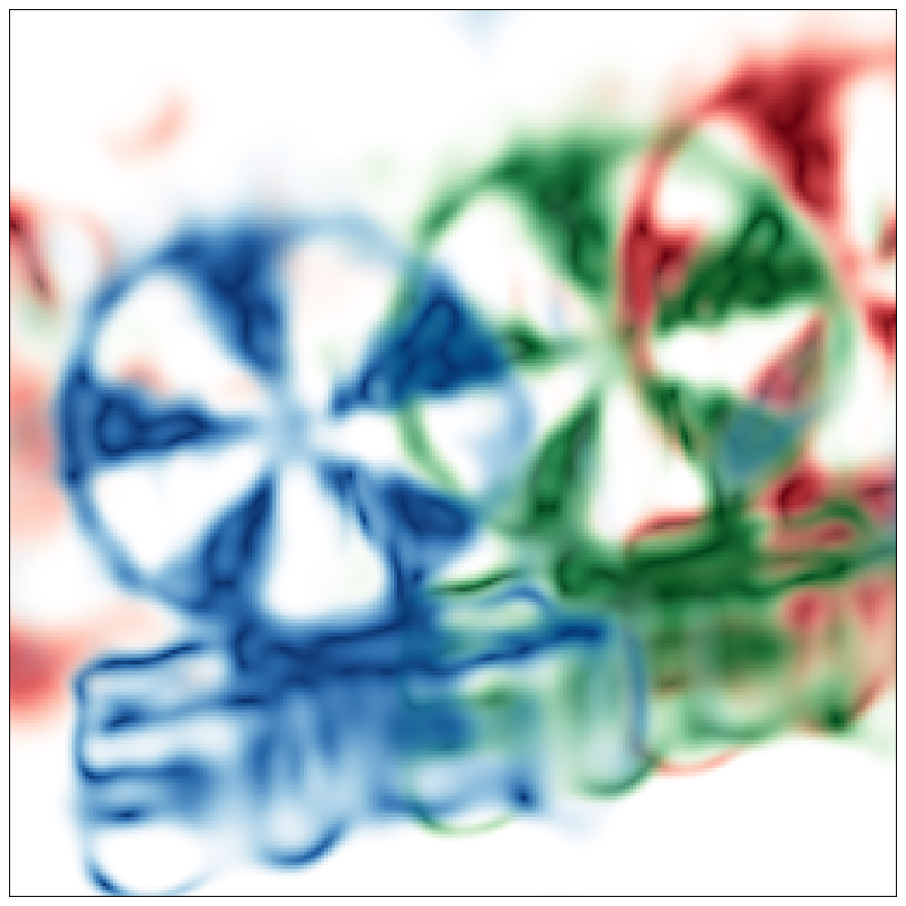
Acquiring Terahertz Imagery at Video-rates using Diffraction-encoded Single-pixel Holography
Sean M. Farrell , Aniket Dashpute, Wolfgang Heidrich, Henry O. Everitt, Ashok Veeraraghavan [under review] Nature Communications, 2026 Achieving high-fidelity video-rate imaging is a fundamental challenge for leading terahertz (THz) sensors due to sensitviity and space-time resolution constraints. To address these challenges, we propose Diffraction-encoded Single-pixel Holography (DiSH), a method that exploits diffraction as a spatial encoding and develop a training-free space-time neural field (STNF) to decode the measurements into a high-resolution holographic 0.643 THz video at 12.3 FPS. |
|
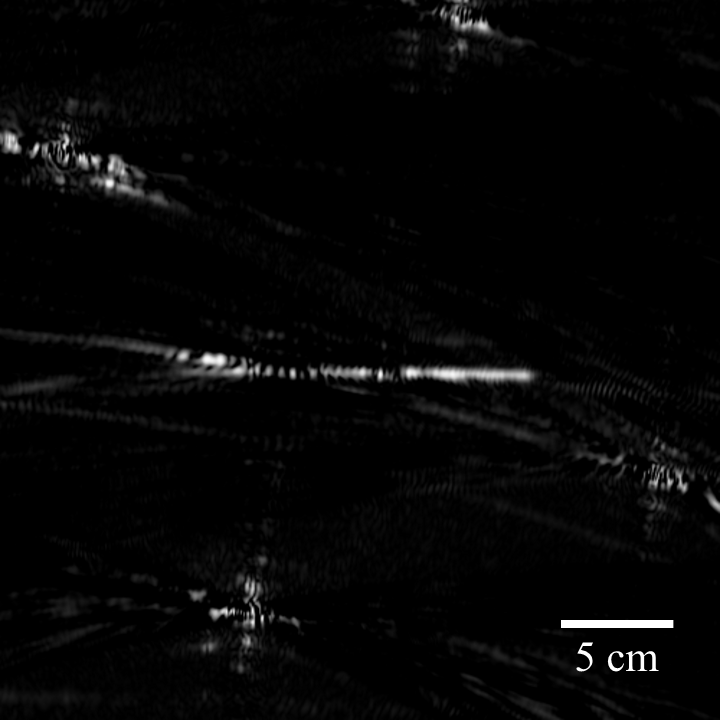
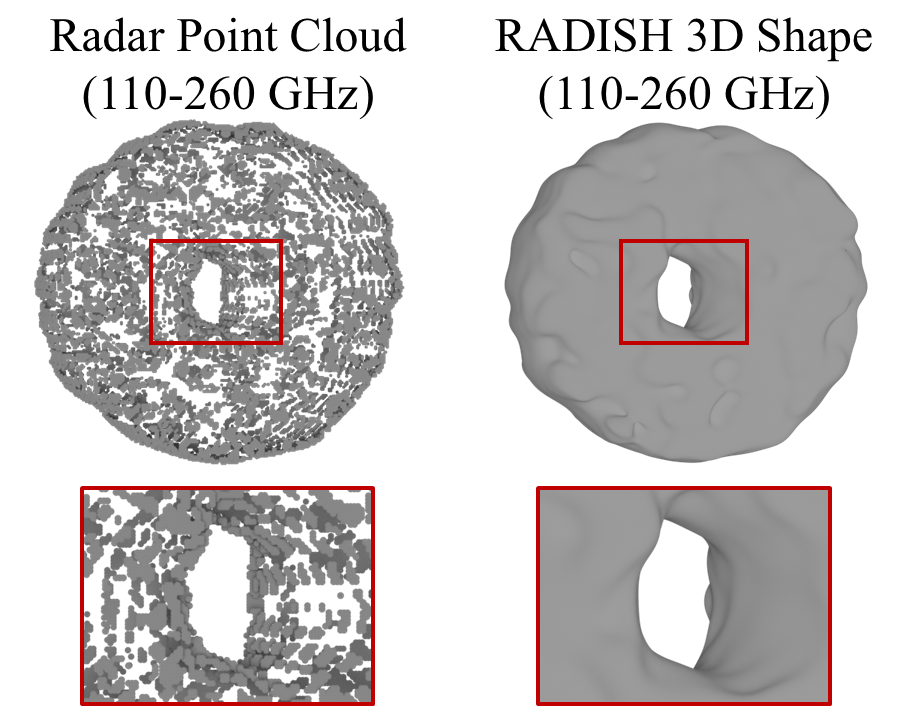
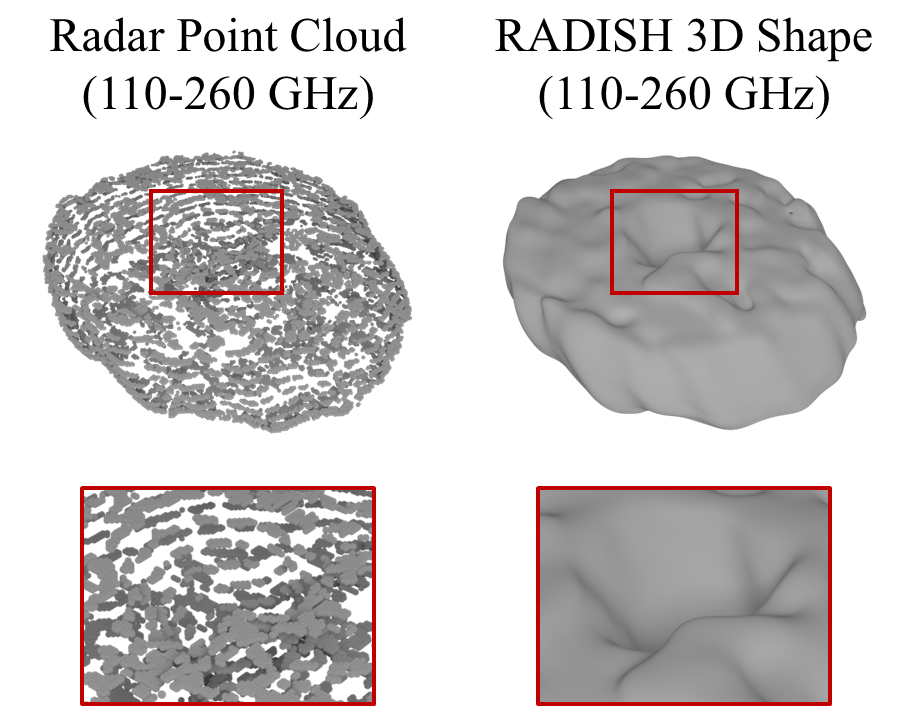
RADISH: Radar Implicit Shapes Via Extreme-Wideband Sub-Terahertz Synthetic Aperture Radar
Sean M. Farrell , Kris Li, Edwin Vargas Ariel Habshush, Li Zhang, Brian Woods, Henry O. Everitt, Ashutosh Sabharwal, Ashok Veeraraghavan CISA, 2025 (CISA 2025 Oral Presentation) [paper] In RADar Implicit SHapes (RADISH) we propose a 110-260 GHz stepped frequency continuous wave (SFCW) synthetic aperture radar testbed and an algorithm that fuses traditional radar detection with an implicit signed distance function to compactly represent an object's continuous 3D shape. |
|
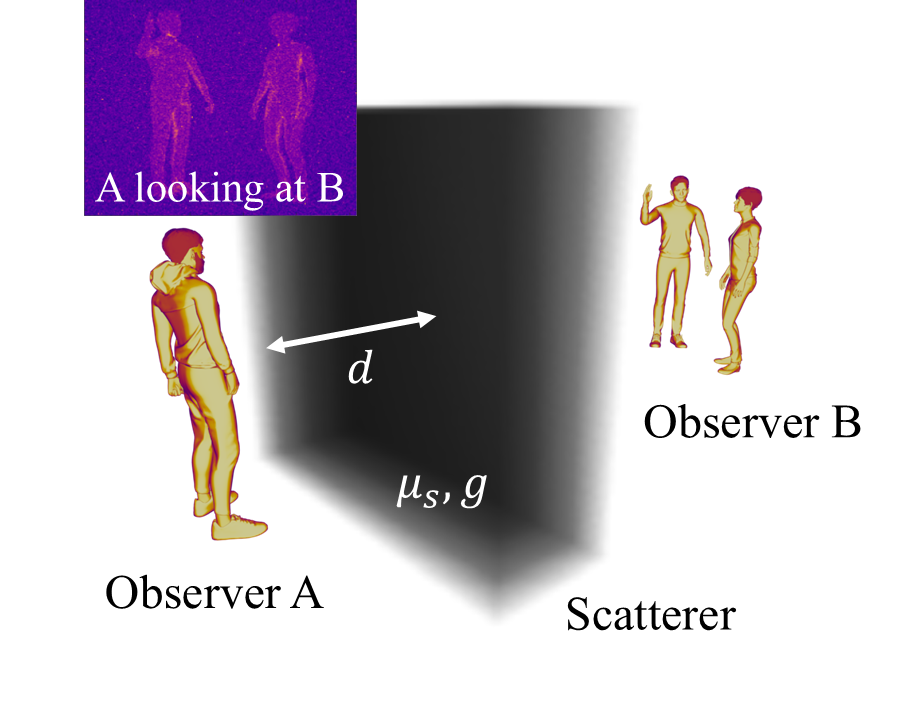
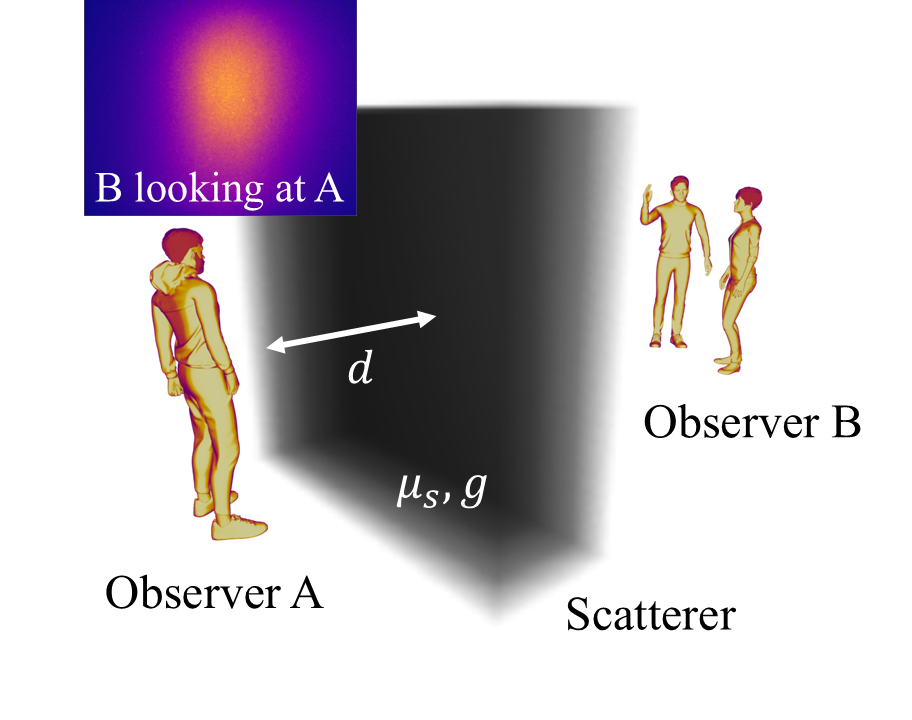
SCREEN: SCatteREr ENabled optical asymmetry
Yongyi Zhao* , Sean M. Farrell* , Christian R. Jacobson, AJ Yates, Andrew McClung, Urcan Guler, Naomi J. Halas, Peter Nordlander Ashok Veeraraghavan Optica, 2025, (* indicates equal contribution) [paper] Optical asymmetry creates a view-dependent visibility. We propose SCREEN, a robust and flexible passive technique for producing optical asymmetry in the visible and mid-wave infrared bands by optimizing the optical and geometric properties of a scattering medium. |
|
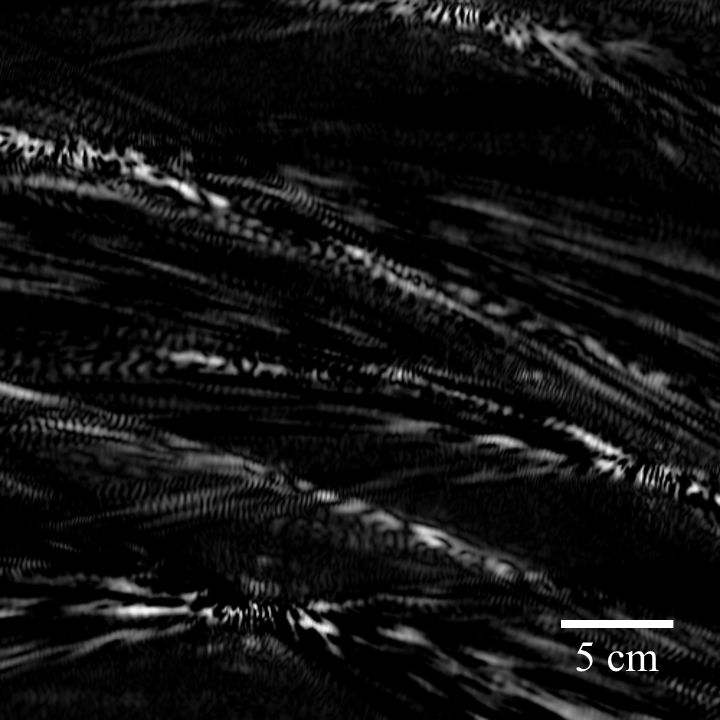
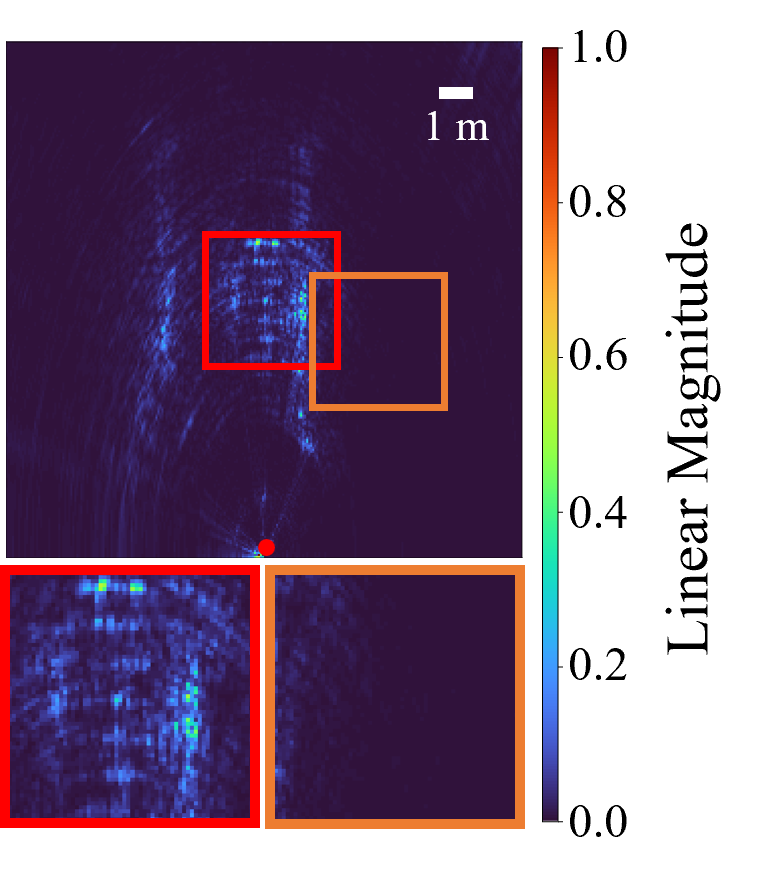
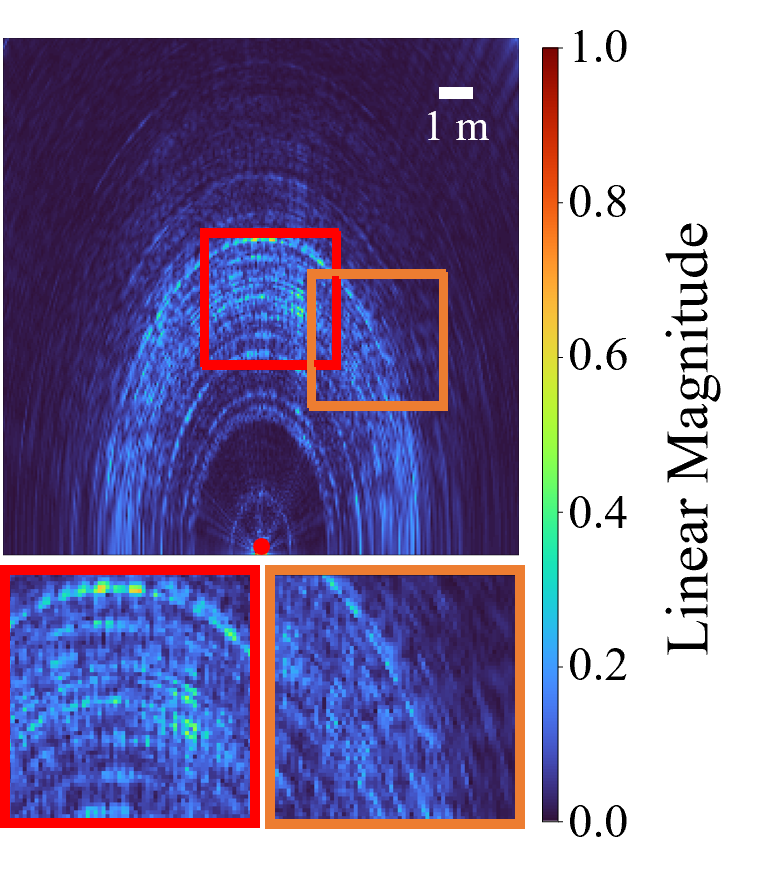
CoIR: Compressive Implicit Radar
Sean M. Farrell , Vivek Boominathan , Nathaniel Raymondi, Ashutosh Sabharwal, Ashok Veeraraghavan TPAMI, 2023 (ICCP 2023 Oral Presentation) [project github] , [paper] Compressive Implicit Radar (CoIR) is an analysis by synthesis method that leverages the implicit neural network bias in convolutional decoders and compressed sensing to perform high accuracy millimeter wave radar imaging. |
|
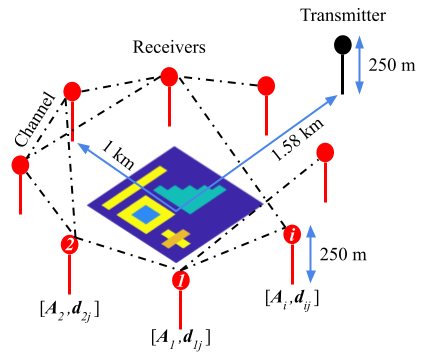
Distributed Generalized Wirtinger Flow for Interferometric Imaging on Networks
Sean M. Farrell , Ashok Veeraraghavan, Ashutosh Sabharwal, César A. Uribe NECSYS, 2022 (Oral Presentation) [paper] We propose a primal-dual distributed algorithm called Distributed Generalized Wirtinger Flow (DGWF) to achieve decentralized interferometric radar imaging over a network. |